February 2023

CAMSHAFT camshaft sensor

Camshaft Position Sensors - CAMSHAFT A camshaft position sensor is found in every modern car. This sensor is an essential part of any car, as it ensures that the engine runs smoothly. When you look under the hood of your car, you may have trouble finding the sensor. Usually, each car manufacturer will have their unique location to put the sensor next to the engine. It can be found behind the cylinder head, in the lift valley of the vehicle, or adjacent to the engine block. What is a camshaft position sensor? The camshaft position sensor tracks the rotation of the camshaft, focusing on when the valves open and close. Most camshaft sensors are located just above the camshaft notched ring. Most of these sensors will use a magnet to generate or alter an AC electrical signal, which will be used in conjunction with a crankshaft position sensor to determine when a position is approaching top dead centre (TDC) on the compression stroke. This data will help fine tune the spark timing and injector pulse. Also called a cylinder identification sensor or phase detector. The ECU in a sequential fuel injection system must decide which cylinder is to fire. The cylinder identification sensor provides this information. Whenever the first cylinder is in top dead centre during engine rotation, the sensor sends a signal to the on-board controller (TDC). Camshaft Position Sensor (CAM) Functions: To determine which cylinder is in the power stroke, the machine computer uses a sensor to monitor the rotational position of the camshaft relative to the crankshaft position. This information will be used to modify spark timing and fuel injector operation. The CAM sensor, also known as the camshaft position sensor, is responsible for informing the ECM of the camshaft position. The camshaft position sensor collects and communicates vehicle camshaft speed data to the Engine Control Module (ECM). This information is used by the ECM to determine the ignition timing as well as the fuel injection timing required by the engine. The engine could not run efficiently without this information. Operating principle: The operation of a camshaft position sensor is less complex and can be easily understood. As mentioned earlier, the ECU in a sequential fuel injection system must decide which cylinder to fire. The cylinder identification sensor provides this information. Whenever the first cylinder is in top dead centre during engine rotation, the sensor sends a signal to the on-board controller (TDC). As a result, the pulse injection duration can be calculated. The on-board controller in simultaneous fuel injection systems does not identify the cylinders or the firing sequence, as this is not necessary for the system to function. The exact cylinder is determined when a crankshaft or distributor advance ignition signal comes in by sensing the mechanical locations of the crankshaft, camshaft, valves or distributor shaft. Common symptoms of a faulty camshaft position sensor: - Check engine light is illuminated - Ignition problem - Engine stalling - Poor acceleration - Problem when shifting gears    

CAMSHAFT camshaft sensor Read More »

Sensors - NOx

  Sensors - NOx Air pollution caused by various forms of gases such as methane, carbon dioxide and nitrous oxide was once the order of the day. Some gases even deplete the ozone layer. As a result, authorities continue to set stricter emissions regulations and the cost of buying diesel vehicles continues to rise. Automakers are now designing some NOx sensors in cars that notify the driver when emissions are not as clean as they should be. What are NOx sensors? As the name suggests, NOx sensors are components used to measure and calculate the amount of nitrogen oxides in exhaust gases. The amount of nitrogen oxides in the exhaust gas indicates whether there is enough oxygen during the combustion process. This helps the catalytic converter to work properly. Their main function is to reduce harmful exhaust by-products and ensure a clean environment. You might be wondering "what happens if a Nox sensor fails"? This sensor will cause the powertrain control module to display the check engine light on the dashboard. You may also experience reduced engine power, poor acceleration and low fuel economy. Nox sensors come in different models and vary from vehicle to vehicle. Older vehicles may include DFP, turbocharger, SCR catalyst and the upstream Nox sensor. Modern vehicles come with upstream and downstream Nox sensors. They measure exhaust emissions and send the data to the engine control module. The ECM calculates how much fuel to send to the combustion chamber. Both upstream and downstream NOx sensors are mounted on the exhaust pipes. They work differently and offer different benefits. The upstream sensor measures the engine's NOx output, while the downstream sensor calculates the NOx emissions from the SCR catalytic converter. How does a NOx sensor work? A NOx sensor is a component of the SCR system that measures the amount of NOx in an exhaust system. This helps the SCR know the correct level of ammonia or urea to provide better fuel economy and less harmful emissions into the atmosphere. In addition to measuring the amount of nitrogen oxides in the exhaust gases, some Nox sensors also monitor the mass of the exhaust flow. A state-of-the-art Nox sensor on modern cars shows compounds that react with nitrogen oxides. These compounds are known as catalysts and are usually made with activated carbon, titanium oxide and other base metals. These compounds send out a voltage that correlates with the level of nitrous oxide. The higher the nitrogen in the exhaust gas, the stronger the voltage. Nox sensors with less sophisticated compounds work for exhaust gas monitoring and oxygen scavenging and analysing Nox concentration. NOx sensor failure symptoms Like other automotive sensors, Nox sensors can fail. Whether you experience symptoms of Nox sensor failure on DD15 engines or symptoms of BMW Nox sensor failure, here are the main signs you should look out for: - High fuel consumption - Rough idling - Irregular acceleration Soot build-up Check engine light What causes NOx sensor failure? Certain factors can cause a NOx sensor to fail. Soot build-up: Because of the location of these sensors, it is not surprising that soot build-up can damage them. While soot build-up is a sign of a faulty Nox sensor, it is also a common cause. Burnt or damaged wiring: burnt or damaged wiring can be the root cause of NOx sensor failure. In such a case, a virtual inspection will identify the problem. The internal connectors that read the NOx level may be faulty. There may be other causes, but these are the common ones you should note. A visual inspection might be all you need to trace the cause of the NOx sensor failure.

Sensors - NOx Read More »

Exhaust gas temperature sensor - EGT

Exhaust gas temperature sensor - EGT What is an exhaust gas temperature sensor? As the name suggests, the exhaust gas temperature sensor measures the temperature of the exhaust gases. This information is then passed back to the engine control unit, or ECU, where appropriate action is taken. In petrol engines, its main role is to protect key components from the higher temperatures common in lean-burn engines - so if the sensor detects excessive temperatures, the ECU will reduce the temperature by lowering the boost pressure for the turbocharger, or increasing the amount of fuel injected for the catalytic converter. In diesel engines, exhaust gas temperature sensors are also used to monitor the temperature of the diesel particulate filter to set the correct temperature for regeneration, reducing harmful emissions. It is not uncommon to have three or more sensors mounted on the exhaust; How do exhaust gas temperature sensors work? There are two types of exhaust gas temperature sensors; one with a positive temperature coefficient (PTC) and the other with a negative temperature coefficient (NTC), the only difference being the way they measure temperature. The NTC element has high resistance at low temperatures and low resistance at high temperatures. In other words, its resistance decreases as the temperature increases. While in a PTC element, the resistance increases with temperature. In any case, a temperature is assigned to the resistance in the ECU and it acts accordingly. Why do exhaust gas temperature sensors fail? One of the common causes of exhaust gas temperature sensor failure is exposure to excessively high temperatures - above 900°C in some cases. Like all wired sensors, severe vibration can weaken the internal connections and any bending or twisting can cause the wire to break, making them particularly vulnerable to damage. These, along with contamination with other fluids such as oil or antifreeze, can affect all of the sensor's response characteristics, causing it to go out of tolerance and give inaccurate readings. What are the symptoms of a faulty exhaust gas temperature sensor? A faulty exhaust gas temperature sensor can adversely affect a vehicle's aftertreatment system, resulting in the following symptoms:Check Engine Light - If the ECU detects a problem with the sensor or signal, the check engine light will illuminate. Reduced fuel efficiency - if the sensor is transmitting incorrect voltages, the DPF regeneration process may take longer, leading to increased fuel consumption. Unnecessary DPF regeneration - faulty sensors can also lead to unnecessary regeneration, causing inconvenience. Failed emissions testing - a false reading can cause the EGR system to malfunction without triggering the check engine light. This can lead to emissions test failure. Component failure - rising exhaust temperature can also contribute to premature failure of other exhaust or internal engine components. How do I diagnose an exhaust gas temperature sensor? To diagnose a faulty exhaust gas temperature sensor, consider the following steps: Perform a scan and read fault codes using a diagnostic tool. Inspect connectors for signs of corrosion or loose connections. Check wiring for any breaks or damage that could cause a short circuit. Inspect the sensor for any buildup of contaminants and clean with a clean, dry cloth as necessary. To test the sensor, use a separate IR meter and compare the readings to live data obtained when using a diagnostic tool. Start the engine so that the exhaust rises in temperature and compare the readings. With the ignition on and the EGT sensor plug disconnected, measure the voltage at the sensor connector - there should be 5 volts. If not, then trace the wire back to the ECU and check the supply there.  

Exhaust gas temperature sensor - EGT Read More »

Fuel temperature sensor

Fuel temperature sensor A fuel temperature sensor is fitted in cars to monitor and regulate the amount of fuel required for consistent and efficient performance. It can transmit data to the car's ECU and helps to fine-tune the amount of fuel introduced. What does a fuel temperature sensor do? A fuel temperature sensor contributes to overall engine safety. It regulates the amount of fuel injected into the cylinder. It is a substantial part of the vehicle's fuel system that observes fuel compression. The sensor involves a thermistor with varied opposition to the fuel temperature. At low fuel temperature, the resistance becomes higher. It has a drastic impact on engine performance. The fuel temperature sensor informs the ECU when it gets too hot which means more fuel is needed for the engine. It will make the fuel thicker and confirm that it is not burning fast. Preferably, the fuel temperature should be below 40°C ,which helps maintain the thermal competence of the engine. In addition, when fuel gets too cold, it becomes denser. Thus, the car engine requires less fuel because it burns more slowly. In general, the fuel temperature sensor is advantageous in defining the fuel quantity. The sensor is located right next to the air intake pipe and the throttle valve housing. You can consult your car's owner's manual to find the exact location as it may differ depending on the make of car. The fuel temperature sensor is precisely designed to assess the vehicle's fuel temperature. This makes it easier to optimise and manage the air-fuel mixture ratio. A well-functioning fuel temperature sensor helps ensure that your vehicle's engine is efficient, regardless of the outside temperature. When the combustion process is carried out efficiently, it's better for the environment, meaning fewer harmful substances are being exhausted through the exhaust system. On the other hand, a poor fuel temperature sensor leads to blockage, decreased power and fuel efficiency. What happens when the fuel temperature sensor stops working? A faulty or malfunctioning fuel temperature sensor either stops sending signals or sends false signals to the system. As a result, coping with and estimating fuel consumption becomes problematic. Globally, the number of vehicles sold and purchased is constantly increasing. Thus, it has become necessary to manage fuel consumption according to strict emission control regulations. Whenever you encounter fuel temperature sensor faults, it is best to take immediate proactive action. You can visit a mechanic or go to the service centre. Before all this, you need to know what is causing the fuel temperature sensor to malfunction. Mostly, it's due to overexposing the car to extreme temperatures. It's also due to weathering and corrosive fuel vapours. What's more, sometimes overfilling the fuel tank causes an overfill. As a result, it affects the engine and sensor. Here are some additional causes of a problematic fuel temperature sensor: A programming problem in the powertrain control module. Minor or major malfunctions in the fuel temperature sensor Open or damaged wiring or connectors. If it continues in this manner, the car will start to burn more fuel than necessary. Here are some common symptoms of a faulty fuel temperature sensor: Poor fuel economy This is the most common symptom. Most importantly, a fuel temperature sensor helps ensure the right amount and mixture of fuel is being consumed. When there is a higher fuel ratio, it is necessary to cool the engine temperature. In the case of a faulty fuel temperature sensor, the reported temperature will not be accurate, as a result, the car will consume more fuel than necessary. Unbalanced temperature readings This is another indication of a faulty fuel temperature sensor. Here you will notice more fluctuations than usual in temperature readings. When you're driving, it might indicate the level is higher or lower than it is. In this case, it is best to visit a mechanic urgently. Black smoke from the exhaust pipe When the fuel temperature sensor is not working, it does not calculate or adjust the fuel ratio. So excess fuel is used and burnt in the combustion chamber. You may notice black smoke coming out of the exhaust pipe at certain times. Engine overheating When the fuel temperature sensor is not working properly, it usually signals cold. Thus, it confuses the system and gives wrong information. Sometimes your car will indicate engine overheating when it's not. Your dashboard will have warning lights on. If you ignore this, your car's performance will suffer. Additionally, if engine overheating is constant, it should be checked by a mechanic immediately. A professional technician can help avoid any further damage. Ignoring this can lead to costly repairs in the future. Check that the check engine light comes on A faulty fuel temperature sensor also turns on the check signal lights on the dashboard because the car's system detects misleading and wrong signals. In this case, it is best to visit your mechanic immediately. Conclusions The bottom line is that a fuel temperature sensor is an integral part of the vehicle. If it is not working effectively, it does not influence the starting of the car, but nevertheless, it affects the overall engine performance. Ignoring the signs and symptoms can lead to serious damage that can be costly in the future.  

Fuel temperature sensor Read More »

IAT Sensor - intake temperature sensor

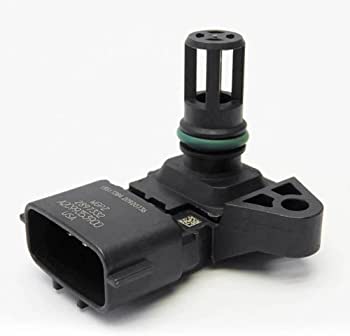
Intake air temperature sensor - IAT How the intake air temperature sensor works: The intake air temperature sensor determines the temperature in the intake pipe and transmits the voltage signals from the temperature to the control unit. This evaluates the signals and influences the mixture formation and the pull angle. The resistance of the temperature sensor changes with the temperature of the intake air. As the temperature increases, the resistance decreases, which reduces the voltage at the sensor. The control unit evaluates these voltage values, as they are directly related to the temperature of the intake air (low temperatures result in high sensor voltage values and high temperatures result in low voltage values). Symptoms of a faulty intake air temperature sensor: A faulty intake air temperature sensor can manifest itself in different ways through the fault detection by the control unit and the resulting contingency programme strategy. Common fault symptoms are: Fault code is stored, engine control lamp may illuminate Starting problems Reduced engine power Increased fuel consumption Causes of a faulty IAT sensor: Internal short circuit Break in wiring Wiring short circuit Mechanical damage Dirty sensor tip    

IAT Sensor - intake temperature sensor Read More »

MAF sensor - air flow meter

Mass Air Flow Sensor - Mass Air Flow ( MAF ) A car's internal combustion engine requires both air and fuel to work properly. The air-fuel ratio must be optimised to ensure uninterrupted combustion and improved engine performance. In the past, a carburettor was the only device that controlled the combination of air and fuel. When modern engine control units (ECUs), also known as engine control modules, were invented, they changed the system significantly. Mass Air Flow (MAF) sensors are used to measure air flow. What is a MAF sensor: A mass air flow sensor is also known as an air meter . It plays a fundamental role in your vehicle. Namely, it measures the amount of air (mass air flow rate) entering the internal combustion engine . Based on these real-time inputs, the engine control unit estimates the amount of fuel mass needed to keep the air and fuel in balance. In addition, note that air density changes with temperature, pressure, humidity, etc. Here again, MAF sensors help. When it comes to measuring the amount of air admitted into each cylinder, they are more accurate than volumetric flow sensors. MAF sensor types: Vane flow meters are an older type of air flow sensors. They are further categorised into VAF, voltage, signal and Karman Vortex airflow sensors. The latter is newer in design. It uses a moving mirror and a phototransistor to measure the airflow. Hot-wire MAF airflow sensors are advanced MAF sensors and are more commonly encountered. They consist of a thermistor, a platinum hot wire and an electronic control circuit. The thermistor is a temperature sensor that measures the air temperature. An electronic control circuit maintains a hot platinum wire at a constant temperature. When air comes into contact with the heated wire, it cools it. When the temperature difference between the two wires changes, the MAF sensor automatically increases or decreases the current to the hot wire. There are also cold-wire airflow sensors that work similarly to their hot-wire counterparts. However, they have additional cold resistance that allows them to measure ambient air. Signs of a faulty MAF sensor: Identifying MAF sensor performance problems can be a challenge, as they are not easy to spot. Here are some of the most common symptoms of a faulty MAF sensor:A malfunctioning MAF sensor can lead to a variety of driving problems, such as engine stalling, jerking, or hesitation while accelerating. You may experience these problems while accelerating. Why do problems occur? Road debris, dust, dirt and other contaminants passing through the air filter can coat the MAF sensor wires and prevent it from accurately measuring airflow. It can send inaccurate airflow reports at lower speeds. As we've already explained, when the MAF sensor isn't working properly, the engine can't mix air and fuel in the proper ratio. Therefore, cleaning the MAF sensor can be a good starting point. However, to ensure the safety of your vehicle, consider having it checked by a mechanic. Bottom Line: The mass airflow sensor is critical to the optimal operation of your vehicle's internal combustion engine. Based on the airflow measurement, the ECU balances the air and fuel. In other words, without a MAF sensor, your car wouldn't run. That's why you need to check and maintain it properly. Fortunately, MAF sensors are relatively cheap to replace.

MAF sensor - air flow meter Read More »

BMW and MINI FRM module

BMW FRM module If you have ever faced the situation where your BMW car's headlights stay on or the signalling doesn't work, the probable cause may be a faulty FRM.In these lines, we will learn about the problems of the FRM module in your BMW. We'll talk about the FRM, its application, the functions it performs, and the problems it creates when faulty. What is FRM? The FRM is an electrical control unit designed to control light and window functions. The module receives signals from several sensors in the car and controls several aspects of the vehicle based on them. FRM is the reason why your DRL works during the day or your parking light comes on every time you park. The FRM is what also controls the power windows, exterior mirrors, adaptive headlights and a few other functions.Therefore, if it's not working properly, it can create several problems at once, but because they are common, they are easily recognisable. FRM is also known as Footwell mode because of its positioning in the driver's area. Functions controlled by FRMs The FRM receives signals from several sensors installed in the car, based on which it controls the lights and windows and performs other system functions. Most of these sensors are common to all BMWs. The common sensors are: Height sensors- Switch switch- Reversing light switch- Brake light switch- Hazard warning flashing switch- Driver's door switch block- Door contacts - for front doors- Driver's side door lock Using feedback from these sensors, FRM controls the following mechanisms: Exterior lights- Headlamps- Brake lights- Fog lights- Parking lights- Licence plate lights- Direction indicators- Hazard warning lights- Centre high mounted stop lamp- Adaptive headlamps by coordinating 2 motor controllers Interior lights- Interior dashboard lights- Front courtesy light- Rear courtesy light- Trunk light- Glovebox light- Glo glovebox light- Torpedo light- Footwell light FRM module functions: In addition to the standard lighting function, the FRM also performs several system functions. Such functions are: 1. Establishing the gateway between LIN Bus and K+Can The FRM module in the BMW establishes a communication between the LIN bus and the CAN . Using this connection, the FRM transfers relevant messages to various destination buses.Components on the LIN Bus: - Special equipment exterior mirrors- Driver's door switch block- Driver's door switch block- x2 band power supply controllers 2. Activation via different signals By using different signals, the FRM module can be activated. Such signals are: - K-CAN active- The hazard warning switch is switched on- The vehicle alarm system has been triggered- Terminal-15 ON- The door contact status has changed 3. Storing the vehicle command FRM is able to store the car command, this is the one that allows vehicle identification. It also stores all important vehicle equipment features. To store the command in the FRM, the vehicle must be travelling at 5 km/h or less with terminal 15 ON. Other system functions: - Exterior mirrors- Drive Power windows- Central locking system- 2-belt power supply controller ( E92 only) FRM control units To control the various lighting functions, the FRM uses various control units. Below is the list of all these control units: Exterior Light Control Units- DSC: Dynamic Stability Control- DSC: Long Phase Assist FLA- LDM: Longitudinal Dynamics Management- RLS: Rain/Light Sensor- RLSS: Solar Rain/Light Sensor Interior Light Control Units- ACSM or MRS: Advance Crash Safety Safety Module/ Multiple Restraint System- FZD: Roof Function Centre- JBE: Junction Box Electronics- SZL: Cluster switch on steering column Other control unit- Seatbelt Extension Controller (E92 only) FRM Issues: Firstly it is good to know that FRM modules are sensitive devices. They are clamped tightly to the leg area on the driver's side. It is out of contact, and to get at it you will have to undo a few bolts. Because of the sensitivity , a little water ingress or voltage fluctuation can damage these devices. Often, starting the car or replacing the battery can damage your FRM module.This can cause several problems simultaneously. Below is a list of such problems caused by a malfunctioning FRM module:- Faulty headlights- Indicators not working- No interior lights- No high beam- Power windows not working- Dashboard service light is always on- Climate control failed- Tail lights not on/off- No auto folding mirrors In case of a faulty FRM, it is always better to send it in for repair. You can also buy a new one, but it will add a lot of expense.A new FRM costs between 400 and 500 Euro. You will then have to programme it to your vehicle's specifications, which adds extra cost. The warranty for these devices is also short, given the sensitivity.Simply put, a new FRM module will cost at least 4x the cost of repair. FRM Module Fault Codes A faulty FRM cannot communicate with OBD-2 scanners, consequently running a diagnostic is unlikely. However, you can find fault codes in other control modules to make sure the FRM is faulty. During diagnostics you may get any of the following common error codes: - 497F - Message error (status, reverse gear, 0x3B0) Transmitter for diesel electronic receiver module - A3B4 - Message (lighting condition) incorrect, FRM transmitter permanent- A3C1 - Message (FRM foot space module) incorrect COMBI receiver, FRM transmitter - Permanent- E72B - Window error- E72C - Window error    

BMW and MINI FRM module Read More »

BMW drivetrain possible to continue journey

BMW DRIVETRAIN MALFUNCTION A drive train malfunction is an error caused by a potential engine or transmission malfunction. To protect the engine, transmission and the driver, the car switches to safe mode. This limits the overall power of the engine, saving it from further damage. Malfunctions like this are usually caused by hard/abrupt acceleration, steep banking or overtaking. When experiencing such a fault, the car also exhibits several symptoms, such as intense shaking, bumpy ride, etc. In this article, we will discuss the BMW vehicles powertrain failure, its causes and symptoms, and possible ways to fix the problem. What does the failure of the propulsion system mean? As mentioned, the propulsion system malfunction is a hardware malfunction. This error occurs when the car's engine computer (known as ECU, ECM, DDE, DME) detects an engine or transmission malfunction. It displays the following error: 'Drive system fault: drive moderately. Maximum transmission power is not available. Consult the service centre"In such a case, your car goes into safe mode or limp mode, in which, the car's ECU (engine control unit) limits the total torque output.This helps prevent any further damage to both the engine and transmission while allowing you to reach your destination safely. Why does the drive system malfunction? The power generated by the engine is transferred to the wheel through the propulsion system while the transmission controls the gearbox ratio to maintain the engine speed.A propulsion system malfunction is caused when any of these components malfunctions.This is generally caused due to the following reasons:Transmission system malfunction due to overused spark plugs Failure to start the engine while experiencing a propulsion system malfunction is due to old/overused spark plugs. In such a case, you should immediately change all the spark plugs simultaneously, as spark plugs are responsible for burning fuel inside the combustion chamber. The intensity of the sparks produced decides the quality of the combustion. This ultimately affects the power produced by the engine. So, having good spark plugs is necessary for smooth running of the engine. Note - If you have a diesel engine, it does not have spark plugs. 2. Transmission system failure due to old ignition coils Ignition coils are responsible for supplying electricity to the spark plugs for spark production. If the coils fail, less power will be produced, resulting in weak sparks. Symptoms such as misfiring, loss of power or sudden engine idling are caused by faulty spark plugs or old ignition coils. A quick diagnosis of the engine coil is enough to know whether the ignition coil or spark plug is faulty. 3. Propulsion system malfunction due to high-pressure fuel pump failure If the propulsion system malfunction occurs during acceleration, it may be caused by a high-pressure fuel pump failure. High-pressure fuel pumps are needed to transfer fuel from the fuel tank to the engine by compression, creating high pressure in the fuel lines. Any high-pressure fuel pump failure can cause inconsistent fuel delivery, resulting in random loss/over power. 4. Transmission system failure due to clogged catalytic converter A catalytic converter is a device that cleans car exhaust emissions by using chemical reactions and converts harmful gases such as CO, NO, NO2, into less harmful CO2 and water vapour. A clogged catalytic converter would stop/slow down the exhaust emission rate, creating pressure in the exhaust unit, which will then clog the combustion chamber, causing the engine to stall due to the increased pressure. Therefore, causing transmission malfunction. 5. Propulsion system failure due to damaged fuel injectors The injectors pump fuel into the combustion chamber. A damaged fuel injector would fail to do this properly, causing inefficient combustion and power loss. This can cause sudden idling, engine stalling, vibration, misfires, etc., ultimately resulting in transmission failure. Low quality fuel, defective turbocharger, blown head gasket or faulty air flow sensor can also be causes for the malfunction of the drive system. Symptoms of a transmission system failure Your BMW may exhibit several symptoms when the powertrain malfunctions. These symptoms may vary depending on the cause of the problem. Based on the symptoms, the root of the problem can be identified. However, there may be one or more reasons for a particular symptom or you may experience multiple symptoms due to a single problem. Here's a list of the most common symptoms seen by BMW owners: - Error " Powertrain malfunction " - Visible shuddering and vibration- Engine lights come on- Power cut during idling / Idling- Transmission stuck in one gear (especially in limp mode)- Engine misfire / Car won't start- Too much smoke from exhaust What you should do when you experience a BMW powertrain malfunction Troubleshooting the powertrain: Restart the engine If a transmission malfunction suddenly occurs while driving or if you feel something is wrong with the power delivery or transmission, the immediate course of action is to stop the car in a safe place. Switch off the engine and let it sit for 5-10 minutes. This will temporarily reset your car's propulsion system failure so you can drive. If your vehicle has already gone into limp mode, it is recommended to continue driving. In this case a service visit is necessary. Troubleshooting the propulsion system: check the engine If restarting the car does not work, you should inspect the engine. See if you have any oil leaks, transmission fuel leaks or any noise

BMW drivetrain possible to continue journey Read More »

Detonation sensor - Knock

Knock Sensor - Knock Although the knock sensor is not as well known as some of its counterparts, it is essential to keep your car's engine running smoothly. It informs you when there is detonation or pre-ignition. What is a detonation sensor? Engine detonation is usually caused by harmful forms of abnormal combustion, such as pre-ignition. The knock sensor, located on the outside of the engine block, records the knocking noise in all engine operating states to prevent engine damage. In other words, it listens to the vibrations carried by the structure of the engine block. Why are these vibration detection sensors important? The knock sensor is necessary because - although loud knocks and pings are heard by humans, the sensor detects imperceptible noises. So, when the sensor detects any high-frequency engine vibration characteristic of knocking noise, it sends a voltage signal to the electronic control unit (ECU) and this delays the timing of the spark plugs. As a result, a knock sensor can reduce fuel consumption, help improve fuel economy and increase torque. What are the signs of a faulty detonation sensor? Detonation sensor failure can easily cause one or more visible symptoms. The most common sensor problems include: 1. An illuminated check engine light When the propulsion powertrain control module (PCM) detects a faulty detonation sensor or circuit, it will illuminate the check engine light and trigger a related diagnostic trouble code ( DTC ). 2. A ping noise from the motor In the event of a detonation sensor failure, the PCM may not be able to recognise or repair the detonation. The faulty sensor may result in a pinging noise from the engine. You will also notice that the noise becomes most prominent when the engine is under high load. 3. Poor Engine Performance A detonation sensor malfunction can cause the PCM to misadjust the ignition timing, resulting in inadequate engine performance. The engine may not feel properly while driving at high speed or when the vehicle is carrying a light or heavy load. In such a case, it should be checked by a mechanic even if the check engine light is not illuminated. 3. Poor acceleration A faulty knock sensor may not let the engine accelerate properly while driving on the motorway, causing the car to lose fuel economy. 4. Loss of power Once the engine control unit realises that the knock sensor is not working properly, the car will most likely lose power. The amount of power lost will depend on the octane limit of the engine and how much it depends on the detonation sensor input. The cars with the greatest power loss are high compression and flex-fuelled engines. This is because the power loss slows down the timing and keeps the transmission out of drive until the detonation sensor is replaced. What causes a detonation fault? There are several reasons why an engine detonation occurs. Here are some potential causes: ⦁ Spark ignition not occurring in time ⦁ Improper air/fuel mixture ratio ⦁ Debris inside the cylinder (dirt and contaminants getting into the cylinders) Defective spark plugs ⦁ Spark plugs that are the wrong type or with ⦁ Low octane fuel ⦁ Incorrect installation of detonation sensors ⦁ Mechanical damage ⦁ Abnormally high engine operating temperatures ⦁ Carbon build-up inside combustion chamber(s)

Detonation sensor - Knock Read More »

en_GBEN