May 2023

Air pressure sensor /MAP

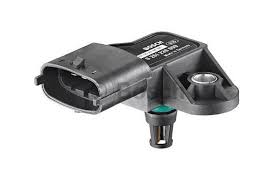
Absolute pressure sensors - MAP How they work: To optimise the air-fuel mixture and to improve combustion and ignition performance, the volume of air admitted to the engine must be constantly monitored and adjusted. Manifold Absolute Manifold Pressure (MAP) sensors are essential to this process. A compact semiconductor vacuum sensor, the MAP sensor takes advantage of the piezoelectric resistance effect, where the electrical resistance changes when pressure is applied to the silicon. This effect is used to measure the pressure in the intake manifold downstream of the throttle valve. The pressure measurement is then transmitted to the engine ECU via electrical signals and is used to calculate the intake air volume. Once this is calculated, the ECU can adjust engine performance to ensure optimum control of the air-fuel ratio. Although this is the primary function of the MAP sensors, these parts are also used to measure the boost pressure coming into the throttle valve and the pressure in the turbo gallery to optimise engine performance in severe turbocharging or supercharging environments. Features and Benefits: ⦁ Bare chip mounting means fewer components and a compact size. ⦁ On-chip noise cancellation reduces the number of components required. ⦁ Durable dual-layer surface copes with harsh intake gallery environment. ⦁ Link connections provide greater reliability and easier installation. What are possible MAP sensor failures? ⦁ Any substances or high humidity in the intake air entering the pressure port can cause MAP sensor failure. ⦁ Vacuum leaks in the intake manifold systems or the hose connecting the MAP sensor to the engine can cause MAP sensor malfunction. ⦁ Shorts and openings in the MAP sensor wiring circuit can cause a discrepancy in characteristics or malfunction. What are the symptoms of MAP sensors? ⦁ Loss of engine power. ⦁ Rough and unstable idling. ⦁ Poor driving, including hesitation during acceleration. ⦁ Stalling shortly after starting or when the accelerator is depressed or released. How can MAP sensor malfunctions be prevented and resolved? ⦁ A problem with the MAP sensor can cause the engine warning lamp to illuminate. This fault is stored under the Diagnostic Trouble Code (DTC) in the engine ECU (P0105...P0109) and can be inspected by a DTC scan tool ⦁ A faulty MAP sensor may not disable the vehicle, but should be replaced as soon as possible to avoid potential engine damage in rich or lean fuel conditions caused by MAP sensor malfunction. ⦁ Make sure there are no intake manifold vacuum anomalies due to leaks or other system problems.

Air pressure sensor /MAP Read More »

Oil pressure sensor

Oil Pressure Sensors - OPS The oil pressure sensor is a fundamental part of the internal combustion engine. It is also sometimes called an "oil pressure sending unit" or "oil pressure switch (OPS)". Its purpose is to monitor the oil pressure in the engine. The oil pressure must be maintained at certain levels to ensure that oil reaches all vital parts of the engine. What does the oil pressure sensor do? An oil pressure sensor is a simple device that activates a warning light on the dashboard when engine oil pressure is not within the set levels. This is a very simple device consisting of a spring switch and a diaphragm. The diaphragm receives oil and is designed to stay open at a set pressure level. The pressure pushes the diaphragm into the switch and keeps the warning lamp off. If the pressure level is not reached, then the switch will trigger the dash light. Generally the oil pressure sensor is there to recognise low oil pressure, not high oil pressure. Low oil pressure can cause serious engine damage and can be the result of a clogged oil filter, a faulty oil pump or other reasons. The purpose of the oil sensor is to give enough warning to stop the engine before any of these things cause real damage. How does the oil pressure sensor work? Most oil pressure sensors are of the simple switch type described in the previous section. The switch opens the electrical circuit if there is a minimum oil pressure level. Another version is an actual sensor that measures the oil pressure. For the switch version, you may see the warning light on the dashboard when the ignition is switched on, but not when the engine is switched off. This is because the switch needs oil pressure to open. When the engine is started, the oil pump starts to build up pressure. As soon as the minimum pressure is reached, the switch opens and the warning lamp will go out. Where is the oil pressure sensor? The oil pressure switch or oil pressure sensor is generally located in the cylinder block near the oil filter or oil filter housing. Older vehicles usually have the OPS connected directly to the oil pressure gauge. On newer vehicles, the OPS works a little differently. The sensor is usually connected to the electronic control module. It measures the actual oil pressure and sends the information to the engine computer. Oil pressure sensors are designed to last the life of the vehicle, but there's always the possibility that they can fail. OPS oil pressure sensor problems can develop certain problems. A common problem is when it starts to leak oil. It could leak from the actual sensor or from the tread. The tread can be resealed, but if the actual sensor is leaking then it will need to be replaced. Another problem is when the OPS clogs or has some other internal malfunction that makes it unable to read the oil pressure correctly. This can lead to the dash light coming on even if the oil pressure is good. How is the oil pressure sensor tested? The testing procedure is different depending on the type of OPS your engine has. The first step is to check the engine oil level and quality. Low oil pressure lights often come on because of an inadequate oil level. The light may also come on if the oil is extremely old and of degraded quality. Otherwise, the sensor leads must be tested and the actual oil pressure in the engine tested. To measure oil pressure, you will need an oil pressure gauge that uses a special adapter to plug in where the original OPS would plug in. If the oil pressure is low with the engine running, then it is a real engine problem. If the pressure is within the correct range and the sensor wiring is ok, then the problem is the actual sensor.

Oil pressure sensor Read More »

en_GBEN